

 Getting the most out of your free Over-The-Air (OTA) television isn’t just about plugging in an antenna; it’s about understanding how broadcast signals actually travel. The placement of your equipment and the technology decoding the signal will determine exactly how many channels you get and how clear they look. Let’s break down the science of antenna placement and look at what the new ATSC 3.0 broadcast standard actually means for your home setup.
Part 1: Antenna Placement Variables and Signal Strength
The fundamental rule of OTA reception comes down to two things: height and a clear path to the broadcast tower. TV signals travel through the air, and they lose strength every time they have to pass through a solid object.
Here is how your location options stack up:
- Indoors (Ground or Upper Floors): This is effective in “Strong” signal areas, typically within 20 to 30 miles of broadcast towers. Upper-floor placement is always preferable to ground-level to minimize immediate ground interference. For best results, place the antenna near a window facing the towers.
- Attic Installation: An attic provides necessary height and removes the hardware from your living space. However, be aware that standard roofing materials can degrade the signal. If your home has a radiant barrier or a metal roof, an attic installation will likely block the signal entirely.
- Outdoors (Roof or Exterior Wall): This is the optimal choice. Exterior mounting mitigates most local neighborhood interference and provides the most reliable line-of-sight to the towers.
- Environmental Interference: Distance isn’t your only enemy. Dense trees, tall buildings, mountains, and even thick concrete walls will severely weaken a broadcast signal before it ever reaches your antenna. regardless of your antenna’s power rating.
Installation Note: Do not permanently mount your antenna until you have established a baseline for reception. Use our Guide: Are free Over-The-Air (OTA) TV broadcasts available in your area? or the public FCC – Digital TV Reception Map to locate your local towers. Then temporarily position the antenna, and run a channel scan on your television to verify signal strength.
Part 2: What is ATSC 3.0 (NextGen TV)?
If you are shopping for antennas or TVs, you have likely seen the terms “ATSC 3.0” or “NextGen TV.” To put it simply: ATSC 1.0 is the digital standard we’ve been using since 2009. ATSC 3.0 is the massive, nationwide upgrade currently rolling out.
Here is what this technological shift actually delivers:
- Enhanced Picture Quality: For the first time, broadcasters can transmit in 4K UHD and utilize High Dynamic Range (HDR). This means sharper images and much more vibrant colors for your local broadcasts.
- Smarter Audio: The new standard uses Dolby AC-4 audio. In practical terms, this allows for better dialogue enhancement (so you can actually hear what people are saying over background noise) and more consistent volume levels across different channels.
- A Stronger Signal: The way ATSC 3.0 signals are transmitted makes them much more robust. They are designed to penetrate buildings more effectively, which should mean fewer dropped channels and a much easier time using indoor antennas.
- Interactive Features: Because NextGen TV marries traditional broadcasting with your home’s internet connection, it allows for interactive menus, advanced on-demand content, and highly targeted emergency weather alerts.
The Big Question: Do I Need a New Antenna?
The simple answer: No. A television antenna is just a piece of metal designed to catch radio frequencies; any standard UHF/VHF antenna can catch an ATSC 3.0 signal. However, to translate that signal into a picture, you need the right decoder. You will need either a new television with a built-in ATSC 3.0 tuner, or an external NextGen TV tuner box plugged into your current setup. See our suggested tuners from our Device Filter.
Conclusion
To get the most out of your OTA setup it comes down to placing your antenna as high as possible with a clear view of the broadcast towers. With the rollout of ATSC 3.0, the quality of free TV is only getting better. Grab your antenna, find the perfect spot, and start enjoying your shows!
Top Rated Antennas
When you purchase through links on our site, we may earn an affiliate commission with no additional cost to you.
-
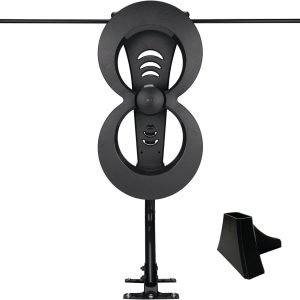
Antennas Direct ClearStream 2MAX Indoor Outdoor TV Antenna, UHF VHF, Multi-Directional, 60+ Mile Range, w/ 20-inch Mast
$79.99 -

Antennas Direct ClearStream 2V Indoor Outdoor TV Antenna UHF VHF 60+ Mile Range, w/Reflector, 20-inch Mast
$99.99 -

THE CIMPLE CO Antenna Amplifier Kit, Digital TV Signal Booster with Coax, Adjustable Gain
$35.97 -
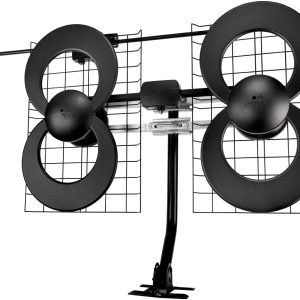
Antennas Direct ClearStream 4V Indoor Outdoor TV Antenna, UHF VHF, 70+ Mile Range, w/ Mast
$134.99 -
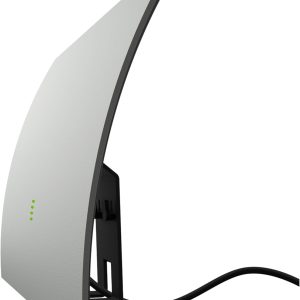
Mohu Gateway Plus Amplified Indoor TV Antenna, Signal Indicator, 60-Mile Range, UHF VHF, Multi-Directional, 4K UHD, NEXTGEN TV – w/Stand, 10ft. Cable
$79.99 -

Televes DiNova Boss Mix UHF/VHF HDTV Antenna w/LTE Filter (144282)
$129.95 -

Televes DATBOSS LR Mix Hi-VHF UHF Antenna with 5G Filter 75 Mile Range 149884
$199.95 -
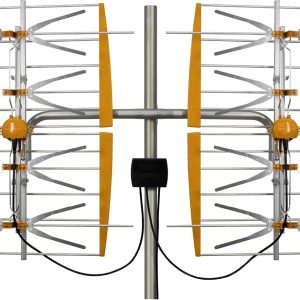
Televes 108381 DATBOSS Mix 8 Bay Dipole Array Powered 4K Ready OTA Antenna Hi-VHF/UHF 5G/LTE Filtered Multi-Directional Dual Market, Yellow/Silver
$229.95 -
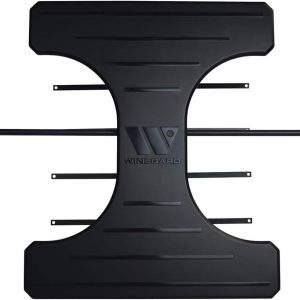
Winegard WE7550S Elite 7550S 70 Mile VHF/UHF Outdoor HDTV Antenna
$179.00 -
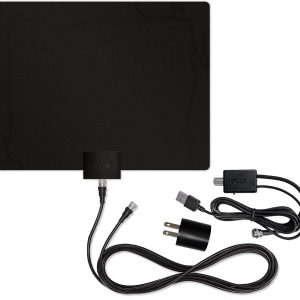
Mohu Leaf 50 Original Paper-Thin Indoor Amplified TV Antenna, UHF VHF, 60-Mile Range, Multi-Directional, 4K 8K UHD NEXTGEN TV – w/ 12 ft. Cable, Jolt Switch
$39.99